
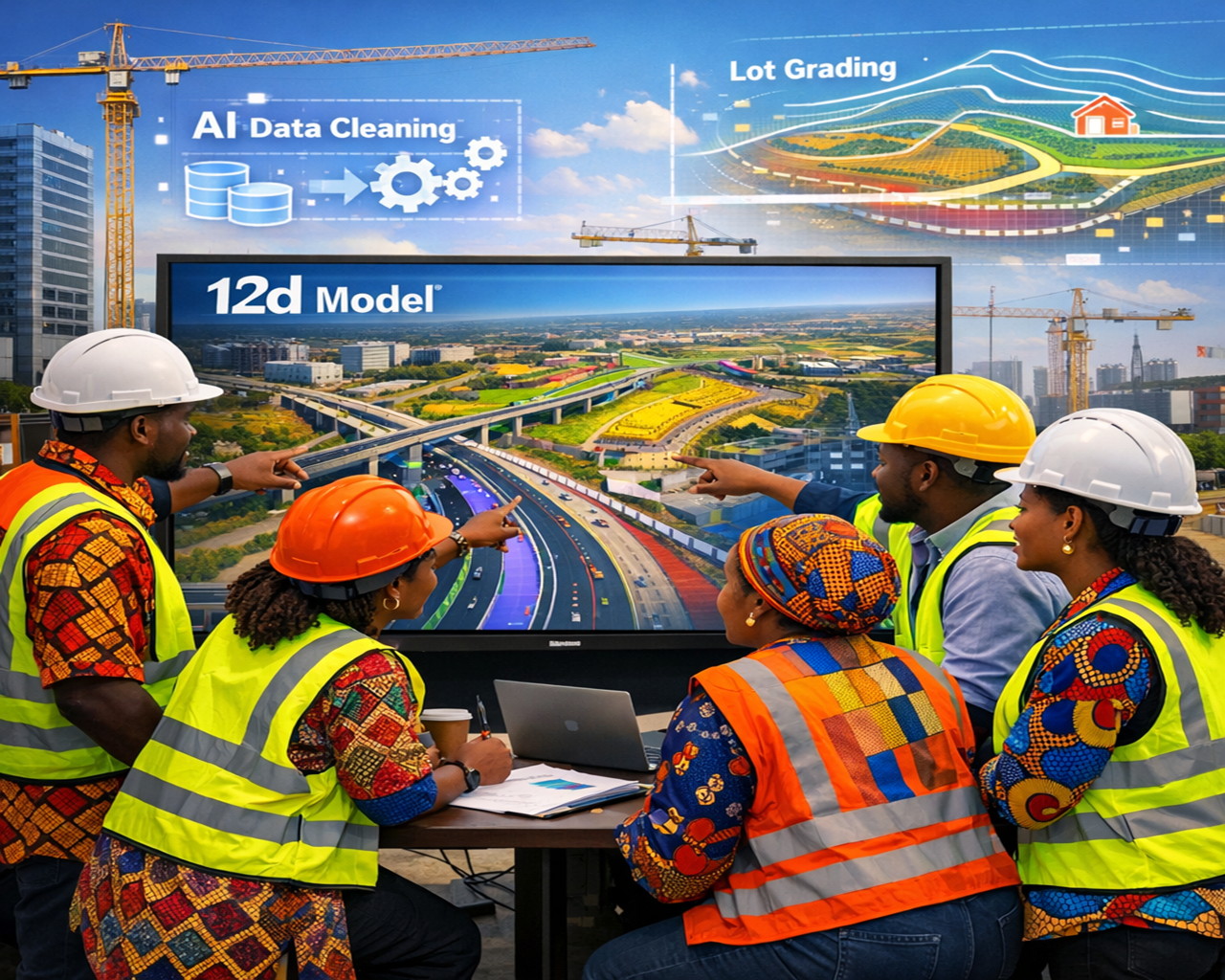
For decades, 12d Model has been the backbone of infrastructure projects across the globe, known for its unparalleled ability to handle complex 3D string-based designs and massive survey datasets. However, as projects grow in complexity and timelines shrink, even the most skilled engineers face the “bottleneck of manual iteration.”
Enter Artificial Intelligence. When we layer AI and Machine Learning (ML) over the 12d environment, we move from reactive modeling to predictive engineering.
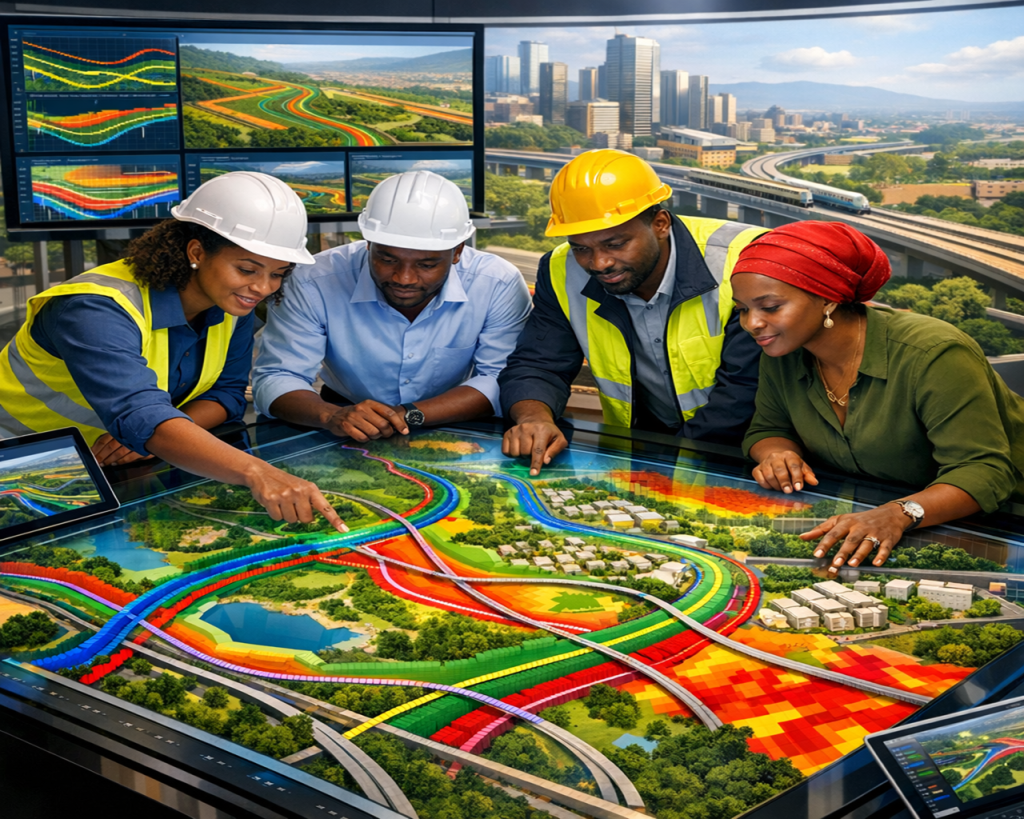
- Generative Design: From One Option to One Thousand
Traditionally, an engineer might use 12d Model to manually test two or three alignment variations for a road or rail project. With AI-integrated workflows, you can define your constraints (environmental buffers, maximum grades, and cost limits) and let an AI agent run thousands of simulations within the 12d environment.
- The Success:Projects like “Level AI” are already proving that master-planned community designs—which used to take weeks of manual lot grading—can now be optimized in hours.
- The Opportunity:AI can automatically suggest minor vertical alignment changes that “unlock” compliance, significantly reducing earthworks costs.
- Autonomous Surveying and Feature Extraction
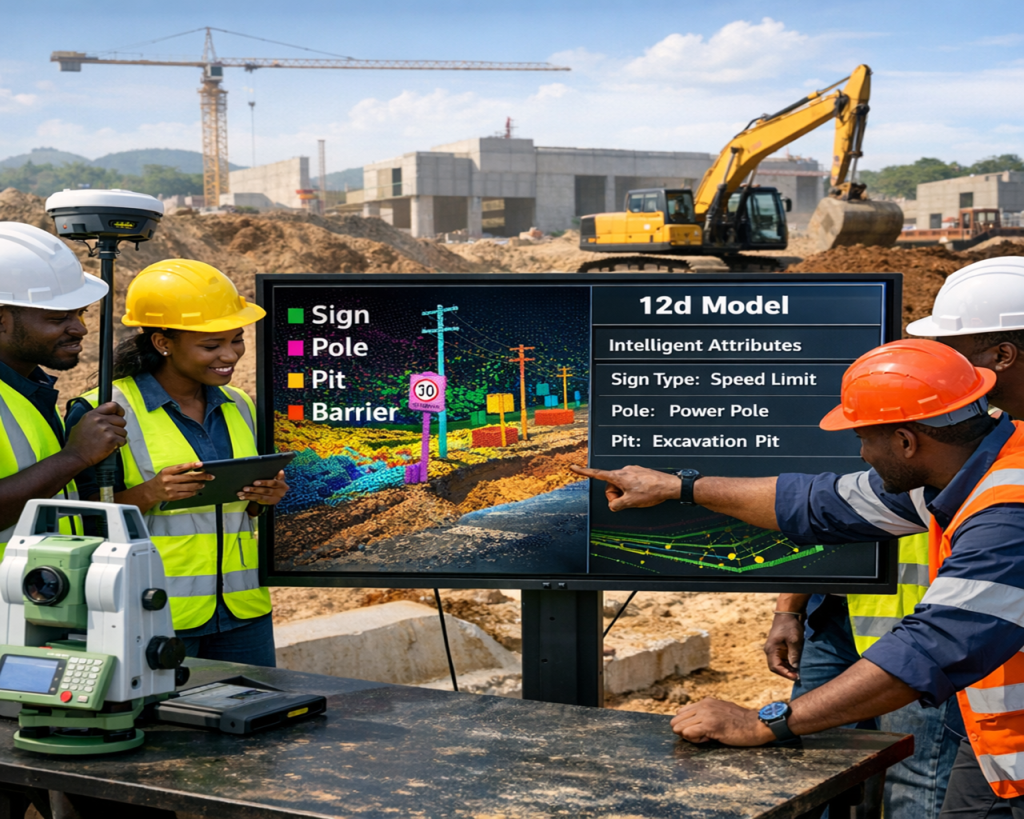
The synergy between 12d Field and AI-powered computer vision is revolutionizing how we handle point clouds. Instead of a technician spending days manually “picking” features from a LiDAR scan, AI algorithms can now:
- Identify and categorize assets (signs, pits, poles) automatically.
- Filter out “noise” (passing cars, vegetation) with 99% accuracy.
- Directly populate 12d Model strings with intelligent attributes.
- Predictive “What-If” Analysis
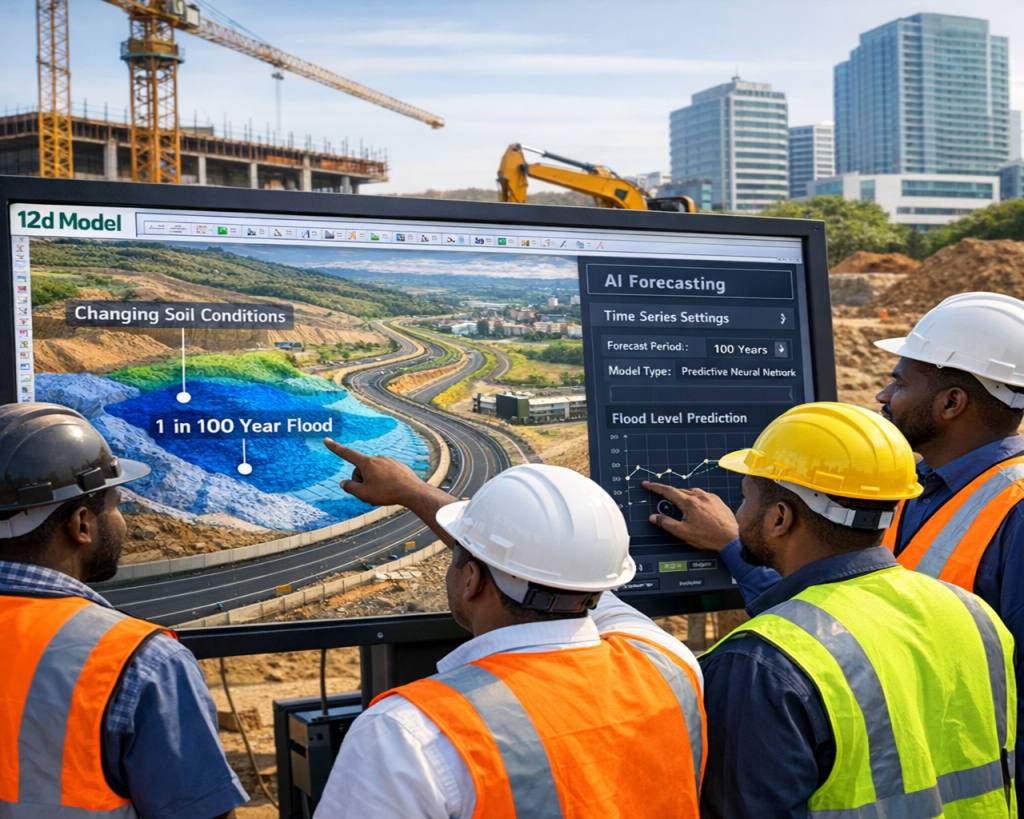
What if the soil conditions change? What if a 1-in-100-year flood event happens during construction? By combining 12d’s hydraulic modeling capabilities with AI’s time-series forecasting, engineers can simulate real-world stress tests.
Real-World Success: The “Force Multiplier” Effect
Recent infrastructure triumphs in the UK and Australia have shown that firms adopting AI-augmented 12d workflows are seeing a 30-40% reduction in design revision cycles. By automating the “boring” tasks—like data cleaning and basic lot grading—engineers are becoming “full-stack” professionals who focus on high-level decision-making and creative problem-solving.
“AI isn’t replacing the surveyor or the engineer; it’s giving them a superpower. It allows us to spend our time on ‘taste’ and ‘strategy’ rather than manual data entry.”
The Road Ahead: 12d Synergy and the Common Data Environment (CDE)
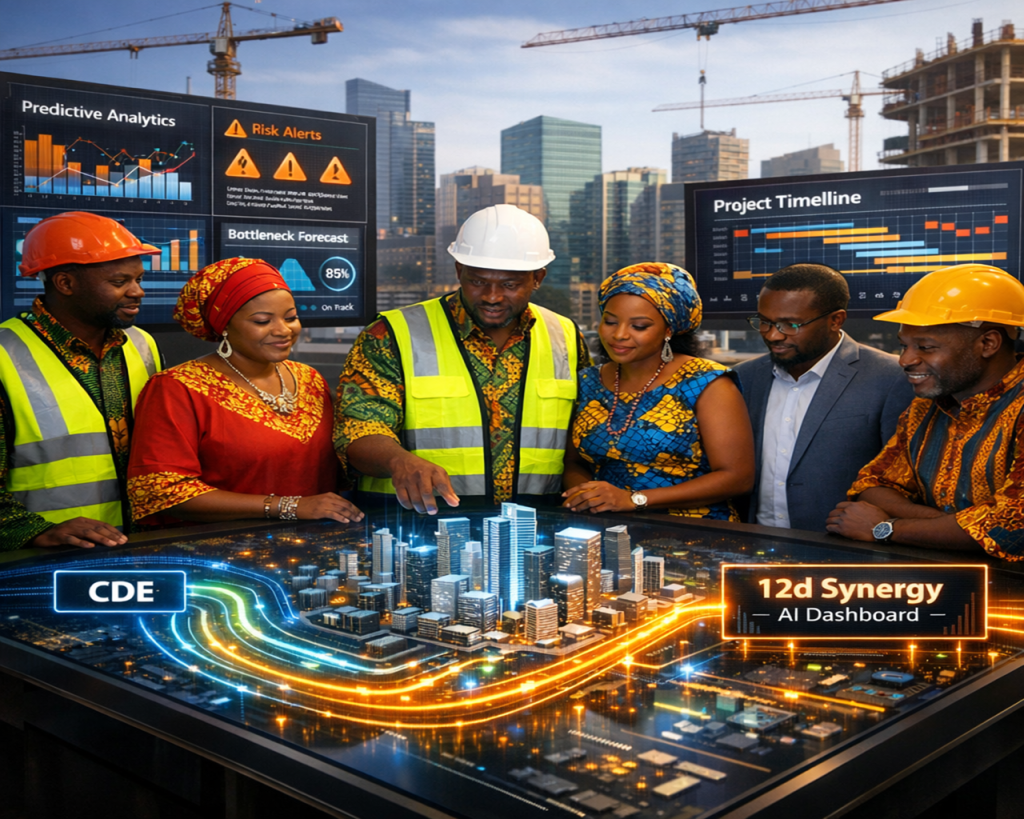
The next massive opportunity lies in 12d Synergy acting as the brain for AI. By feeding historical project data from a CDE into machine learning models, firms can predict project bottlenecks before they happen, identifying risks in the schedule long before a shovel hits the ground.
Conclusion: Are You Ready for the AI Shift?
The combination of 12d Model’s precision and AI’s speed is creating a new era of “High-Fidelity Engineering.” The opportunities are enormous—from reducing carbon footprints through optimized earthworks to solving the global labor shortage through automation.